7 reading tracks
Start Here
New here? Start with three pieces, then go deeper along seven reading tracks. Each track reads well in order, and each piece stands on its own.
Three ways in
Three starting points, each showing a different side of what I do.
- article Traffic Replay as a Security PrimitiveApplied security from the operator's side: WAF tuning stays a guessing game until you can replay the traffic that triggered the rule.
- article The Economics of InferenceWhy inference tokens behave less like API calls and more like water, electricity, and gas, and what that means for the AI economy.
- link The hx benchmarksFor judging the engineering by something you can run. hx is a Haskell toolchain written in Rust, and the page writes down the test machine, the method, and the limits.
The seven tracks below go deeper, one subject at a time. A track can mix kinds: an article, the project it describes, and the book worth reading alongside.
Edge systems and applied security
How policy, auth, WAF, and observability are moving to the edge, and what that means for how we build backends.
-
 1 of 3article Edge Systems Are the New BackendAuth, policy, inference, and business logic are moving to the edge and the client. The traditional backend is becoming a persistence layer.
- 2 of 3article What Zentinel Is Really Optimizing ForEvery major proxy was a product of its time. Zentinel is a product of this one: safety, operability, and the operator's ability to sleep.
-
 3 of 3article Notes from RSAC 2026Third time at RSA Conference, first time as a speaker. What I saw on the floor and what I am still processing.
Building agent platforms
The Agent Platform Handbook builds an agent harness from first principles, one post and one working piece of code at a time.
-
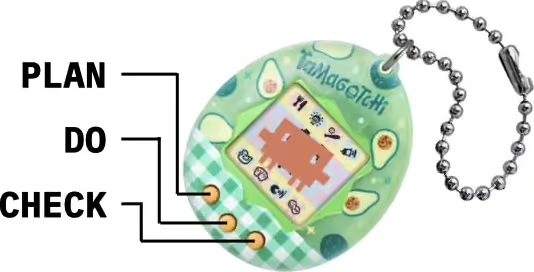 1 of 3article What an Agent Actually IsThe most overloaded word in the industry, taken apart: the anatomy, the lineage, and a working agent in about two hundred lines of TypeScript.
-
 2 of 3article Your Agent Wants RootAn agent with a shell tool is arbitrary code execution with a friendly face. Why Docker alone is not enough, and a hardened sandbox you can use today.
-
 3 of 3article The Bill Is Part of the LoopEvery response already carries its own cost. Turning that number into something the loop can see and act on.
Machines that learn to play
How game-playing programs learn, shown on chess, shogi and Go: the series, the engines you can play against, and the books behind them.
-
 1 of 4article Learning to PlayA chess prodigy's handbook, three old games and one laptop: rebuilding the ideas behind game-playing AI in Rust for a browser on my phone, and measuring them.
-
 2 of 4project KishiThe engines from the series, playing chess, shogi and Go in your browser, offline, from novice to full strength.
-
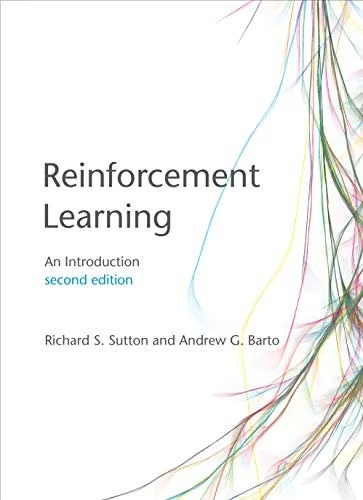 3 of 4book Reinforcement Learning: An IntroductionThe textbook behind self-play: what an engine that learns from its own games is actually doing.
-
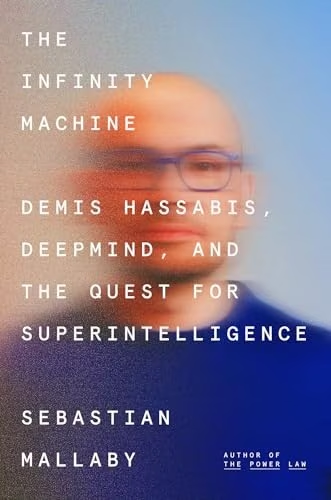 4 of 4book The Infinity MachineDeepMind's road from game-playing programs and AlphaGo to the race for general intelligence.
Brains, emulation, and simulated minds
What it would take to copy a brain into a computer, and what a few thousand simulated neurons already do.
-
 1 of 4article Brain Emulation, Read as an Infrastructure ProblemAn MIT thesis argues brain emulation has crossed into engineering. Read as infrastructure, the numbers describe a workload your AI cluster was not built for.
-
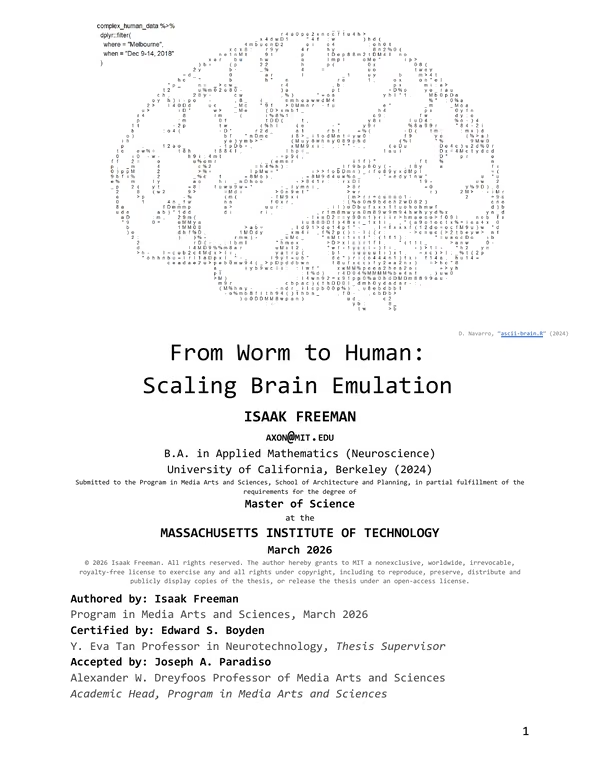 2 of 4paper From Worm to Human: Scaling Brain EmulationA thesis that treats brain emulation as an engineering programme, and whose numbers read like a capacity plan.
-
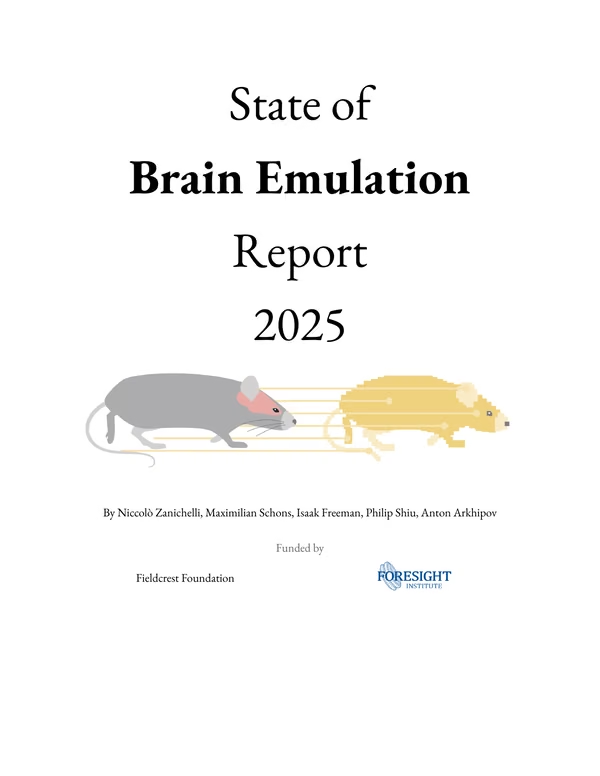 3 of 4report State of Brain Emulation Report 2025The field's own survey of where connectomics, recording, and modelling stand, and how far apart they still are.
-
 4 of 4project HotaruSimulated neuron cultures on a 60-electrode array play Pong in your browser, and improve only when their input goes quiet as the paddle finds the ball.
The open web and its data
The web as a gift, as a training set, and as a commons worth keeping open.
-
 1 of 4review The Web Was the Training SetTim Berners-Lee's memoir is the story of a British engineer at a Franco-Swiss lab giving a protocol away. Read in 2026, it is also the origin story of AI's data supply.
-
 2 of 4article The Bottleneck Is Data, and Europe Is Sitting on ItFrontier AI is running short on public text, not compute. Europe's edge is the high-quality data it never put online. Capturing it needs coordination.
-
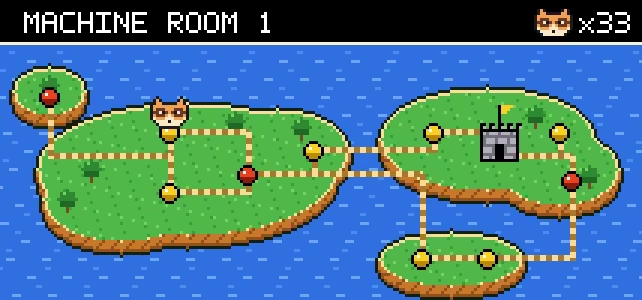 3 of 4article This Site Is Becoming a MapA blog shows what I wrote last. The new map on raskell.io shows what I keep coming back to, and it is the start of a public second brain.
-
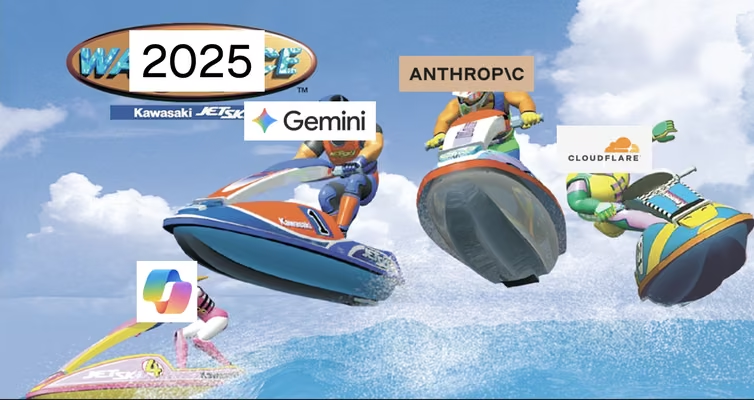 4 of 4article Looking back on 2025On reading Tim Berners-Lee in Okinawa, and why AI might accidentally save the web from itself.
Platform automation and operability
Workflows, guardrails, and the tooling that makes shipping sustainable.
-
 1 of 3article How AI Makes Bare Metal Viable AgainI moved two production apps from Kubernetes to a single Hetzner box. The missing piece was not the hardware.
-
 2 of 3article Mise ate my MakefileMise replaced Make, asdf, and a pile of shell scripts with a single TOML file per project.
-
 3 of 3article How I Work These DaysFrom Kaggle and Hugging Face in 2020 to coding agents in late 2025, and why the routine finally feels right.
Languages, AI, and open source
What happens to programming languages when AI writes most of the code, and why Haskell still matters.
-
 1 of 3article The Last Programming Language Might Not Be for HumansThree futures for the layer between human intent and machine execution, and why I bet on Haskell.
-
 2 of 3article All beginning is HaskellHow Haskell shaped the way I think about building systems.
-
 3 of 3article Why We Built a Haskell Package Manager in Rusthx, a fast Haskell toolchain written in Rust, and why it follows the playbook that modernised Python tooling.